Dosing precision
A capsule contains what it contains. A pump delivers roughly the same volume each time, and roughly is the operative word, especially as a bottle empties.
BreathiZen blog
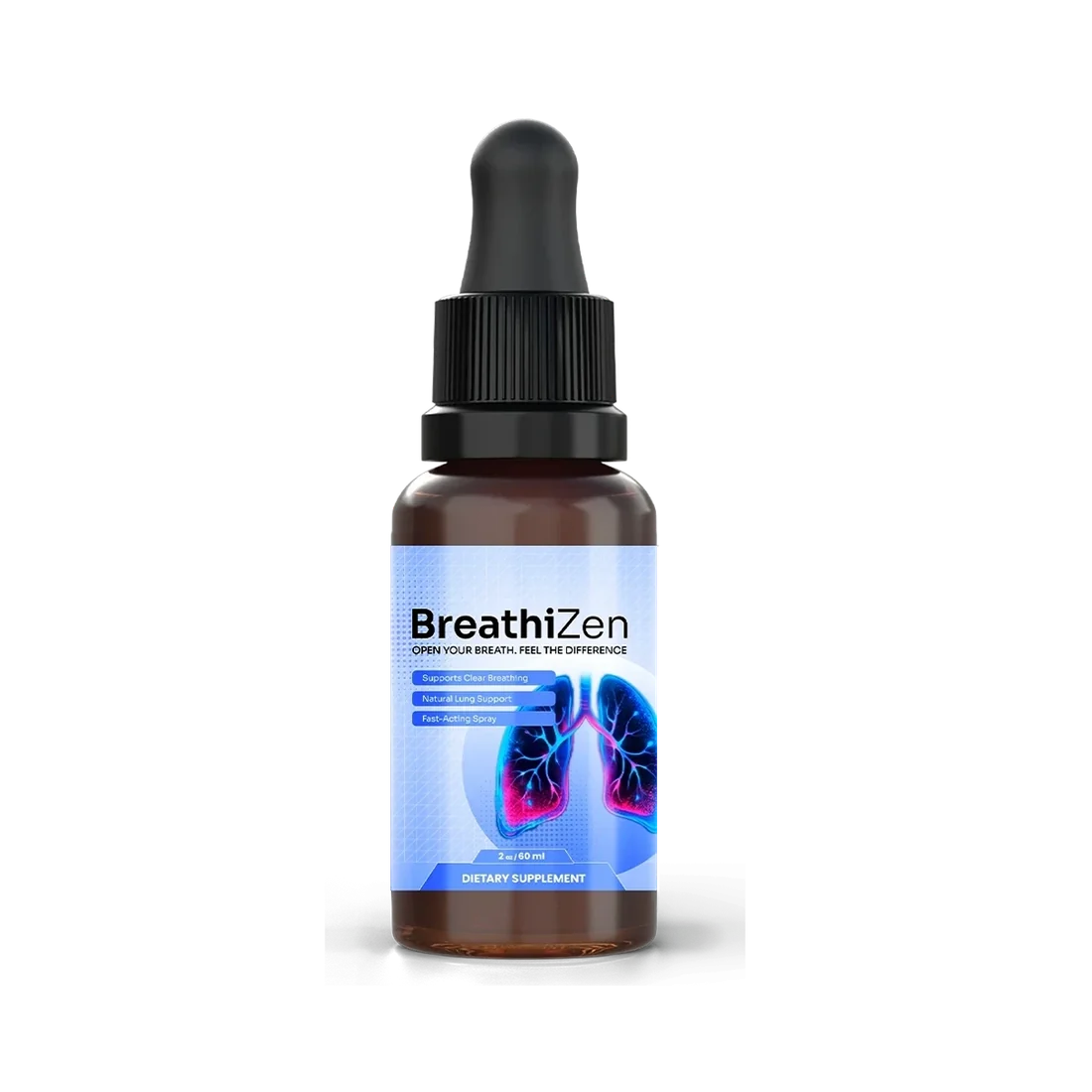
"Fast-acting spray" is on the BreathiZen label. It is worth knowing what that phrase can and cannot mean.
The claim
“Fast-Acting Spray” is printed on the BreathiZen label. It is one of three claims on the bottle and the only one about the product rather than the effect, which makes it the easiest of the three to examine honestly.
The claim is doing two jobs at once. The obvious reading is that you will feel something sooner. The defensible reading is narrower: that a liquid begins absorbing sooner than a capsule does. Those are not the same statement, and the gap between them is where most of this category's marketing sits.
Both readings are worth taking apart, because the spray-versus-capsule argument is made about hundreds of products and almost never with any precision.
The mechanism
A capsule has to open. The shell — gelatin or a plant cellulose — takes several minutes to break down in the stomach before anything inside starts dissolving. A tablet takes longer still, because it has been compressed and has to disintegrate first.
A liquid skips both steps. It is already dissolved, so absorption begins as soon as it reaches tissue that can absorb it. That is a real difference and it is measurable.
The honest size of it is minutes. Perhaps ten to thirty, depending on the product and on what else is in your stomach. For a painkiller that matters. For a botanical blend taken once a day for weeks, a twenty-minute head start on the first absorption is not the variable that decides anything.
So: true, and much less important than it sounds.
The bigger claim
The bigger claim, usually implied rather than printed, is sublingual absorption: that a spray under the tongue enters the bloodstream directly and bypasses the liver.
This is genuinely true for some compounds. It is how certain prescription medicines are designed to work, and it is why they are formulated the way they are. But it depends heavily on the molecule — it needs to be small, fat-soluble enough to cross the membrane, and present at a high enough concentration to drive the transfer in the few minutes before you swallow.
Most botanical extract compounds do not meet those conditions well, and a mouthful of liquid is swallowed within a minute or two regardless. The realistic position is that a small fraction may absorb through the mouth and the rest goes down and is processed like anything else.
Which is why the BreathiZen instruction is worth noticing: it says into the mouth or onto the tongue. It does not say under the tongue, and it does not say to hold it for thirty seconds. A label that wanted to lean on the sublingual argument would say both. This one does not, and we would rather credit that restraint than read a claim into it.
The real advantage
There is one place a spray genuinely beats a capsule, and it has nothing to do with absorption speed. It is contact.
Demulcents work by touching things. Marshmallow root's mucilage forms a film on the tissue it meets; mullein's traditional use as a throat tea depends on the same property. Neither description survives being locked inside a capsule that opens in the stomach, several feet past the throat entirely.
So when BreathiZen puts marshmallow root and mullein leaf in a liquid you hold in your mouth, that is a sensible formulation decision rather than a marketing one. It is modest, it is short-lived, and it is real — and it is a much better argument for this form than the word “fast-acting” is.
The second advantage is unglamorous: people who dislike swallowing capsules actually take sprays. Adherence is the largest single variable in whether any supplement does anything for anyone, and a form you will still be using in week six beats a form you abandoned in week two.
The trade-offs
Six of them, and the first is the one that gets mentioned least.
A capsule contains what it contains. A pump delivers roughly the same volume each time, and roughly is the operative word, especially as a bottle empties.
Ten botanical extracts taste like ten botanical extracts. This is why flavouring appears in almost every liquid supplement, including this one.
A dissolved compound is less stable than a dry one. Amber glass addresses light; it does not address time, and no opened-bottle life is published for this product.
A liquid usually needs one. A capsule usually does not. Neither is named on this label, because no other-ingredients line was supplied.
Liquids are heavier to ship and more expensive to package in glass. Some of that reaches the price.
A 60 ml glass bottle is not a blister pack. It travels less well and it breaks.
Extra
The figures people quote for sprays — 90 percent absorption against 10 percent for capsules, or similar — are usually borrowed from research on specific molecules in specific delivery systems, most often prescription drugs designed from the start to be absorbed in the mouth.
Those numbers do not transfer to a botanical blend. A plant extract is not one molecule; it is dozens, with different sizes, different solubilities and different behaviour at a mucous membrane. There is no single absorption figure for such a mixture, in any format, and a page quoting one has not measured it.
It is worth applying the same scepticism to capsule marketing, which has its own version of this: delayed-release shells, enteric coatings and “targeted delivery” claims that are real technologies used honestly in medicine and loosely in supplements.
Three things, none of which involve absorption percentages. Does the formula contain anything that works on contact? If yes, a liquid has a real advantage. If the ingredients all work systemically, the form is close to irrelevant. Which one will you take for eight weeks? Adherence beats pharmacology at this scale. Which one publishes its amounts? A disclosed capsule beats an undisclosed spray on the thing that actually matters, every time.
That last point is uncomfortable to write on a site that sells the undisclosed spray, and it is still true.
Comparison
| Oral spray | Capsule | |
|---|---|---|
| Absorption starts | Immediately, nothing to dissolve | After the shell opens |
| Practical difference | Minutes | Minutes |
| Contact with throat tissue | Yes - the real advantage | No |
| Dose precision | Good, not exact | Exact |
| Taste | Has to be managed | None |
| Stability | Lower, needs dark glass | Higher |
| Travel | Glass, liquid limits | Easy |
| Adherence | Better for people who dislike capsules | Better for people who dislike flavours |
Summary
Yes, but not for the reason the label implies.
The form matters because marshmallow root and mullein leaf need contact to do the one thing they are traditionally used for, and because a product you will still be taking in week six is worth more than one with a theoretically better absorption profile that sits in a drawer.
It does not matter because of speed. “Fast-acting” is true in a narrow technical sense and misleading in the sense most readers will take it. If you are choosing between a spray and a capsule, choose on the ingredients that need contact, on taste, and on which one you will actually take — not on a claim about minutes.
References
Published prices run $49 to $89 a bottle with a 60-day money-back window and a U.S. order desk for tracking and refunds.
60-day money-back window · ships from inside the US